Choose the essential packing materials after the box estimate is complete.
Worked planning example
The worked box estimate uses three metres per box. For 34 boxes that is 102 m, so three rolls of 50 m. Those lengths are editable assumptions; your box closures and tape product can differ. Buy according to the actual roll length rather than counting rolls without their dimensions.
Essential
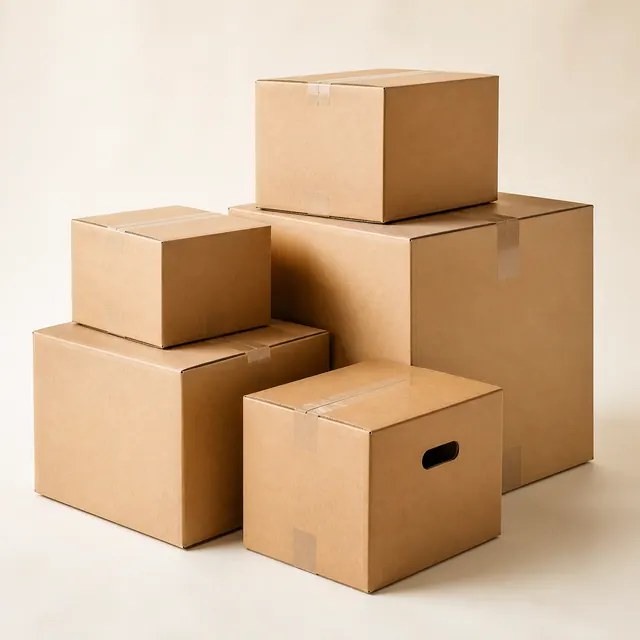
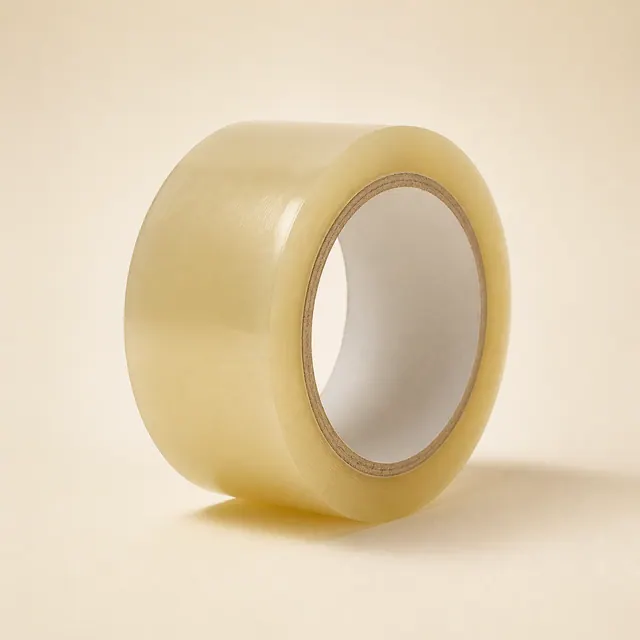
Start with suitable boxes, strong packing tape, a marker and labels. These are the minimum materials for closing, identifying and routing packed items.
Useful protection
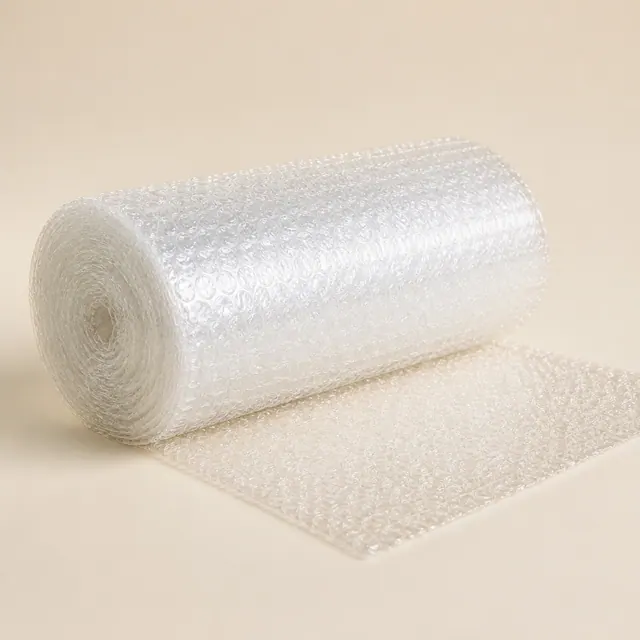
Paper, bubble wrap, corner protectors and furniture blankets can reduce movement and surface damage. Match protection to fragility rather than wrapping every item the same way.
Optional convenience
Tape dispensers, colour labels and stretch wrap can speed a large move, but they do not replace sound packing and careful lifting.
Practical checklist
Test tape adhesion before packing the full move.
Avoid placing adhesive directly on finished furniture.
Babushka Picks
A short list for the next step
Start with the essential item, add the useful option when it improves the job, and treat the final choice as optional.
How much tape does the checklist's worked example need?
The example needs three 50 m tape rolls: 34 boxes at an assumed 3 m of tape each require 102 m, which rounds up to three complete rolls. This is a purchasing estimate. Change the tape-per-box figure for your closure method and check the actual roll length rather than treating every roll as equivalent.
Should I buy bubble wrap for every box?
No. Match protection to the contents instead of multiplying one material by every box. Fragile objects, empty spaces and surface protection can require different approaches. The box-and-tape example does not calculate a tested protection system; inventory the items that need wrapping and use suitable packing instructions for those objects.
How do I avoid buying supplies I already have?
Count usable existing boxes, tape and protective materials before placing the order, and inspect their condition and dimensions. Compare that stock with the calculated purchase quantities in matching units. Keep any reserve explicit so that the checklist distinguishes items you need to buy from supplies you plan to reuse or retain as spares.
Calculation/content reviewed 4 October 2026. Source: Babushka Market’s displayed formulas, units and labelled editable assumptions. How the estimates work
Example from an existing calculator
Moving Box Calculator: Inside Capacity and Cargo Volume | Babushka Market. This worked example demonstrates the calculation in the linked tool. Its displayed assumptions apply to that example; use the guidance above to decide which measurements, product specifications or quantities belong to your own task.
Worked example
With Books contents (m³): 0.15; Clothes contents (m³): 0.3; Kitchen contents (m³): 0.2; Bedroom contents (m³): 0.2; Bathroom contents (m³): 0.05; Other contents (m³): 0.1; Usable INSIDE box capacity (L): 40.92; OUTSIDE length (cm): 44.8; OUTSIDE width (cm): 31.8; OUTSIDE height (cm): 30.8; Reserve (%): 10; Fill of inside capacity (%): 80; Tape per box (m): 3; Tape roll length (m): 50; Measured wrap area (m²): 12; Wrap allowance (%): 10; Wrap roll width (m): 0.5; Wrap roll length (m): 50, the calculator returns Calculated result: 37 boxes.
Inputs
Inputs
Changed input
Books contents (m³)
0.15
Clothes contents (m³)
0.3
Kitchen contents (m³)
0.2
Bedroom contents (m³)
0.2
Bathroom contents (m³)
0.05
Other contents (m³)
0.1
Usable INSIDE box capacity (L)
40.92
OUTSIDE length (cm)
44.8
OUTSIDE width (cm)
31.8
OUTSIDE height (cm)
30.8
Reserve (%)
10
Fill of inside capacity (%)
80
Tape per box (m)
3
Tape roll length (m)
50
Measured wrap area (m²)
12
Wrap allowance (%)
10
Wrap roll width (m)
0.5
Wrap roll length (m)
50
Calculated result
Calculated result
Changed input
Calculated result
37 boxes
Inside capacity
40.92 L
Outside size
44.8 × 31.8 × 30.8 cm
Packing assumptions
10% reserve · 80% inside fill
Tape / wrap
3 / 1 rolls
Method and assumptions
Estimate contents room by room, excluding furniture that travels separately. Measure or estimate the loose contents and choose the usable inside box capacity. The starting room volumes are examples you can change. Sibo lists 44 × 31 × 30 cm as internal dimensions, giving 40.92 L geometrically. Its starred 60 × 40 × 40 cm is external: 0.096 m³ is transport space, not a confirmed 96 L packing capacity. Enter the exterior measurements separately. For each room: boxes = round up(contents × reserve factor ÷ inside capacity ÷ fill fraction). Rounding per room keeps the shopping list practical, but heavy contents also need the supplier’s weight limit. Tape metres per box, roll length, wrap area and allowance are editable planning inputs. Measure a sealing path or one packed sample box before purchasing. The result keeps these assumptions beside quantities. Send the packed exterior volume to the van tool once, then add furniture separately. Do not also add the same boxes as individual inventory rows. Print the room totals and assumptions.
Common-value reference
The reference cases change only Books contents (m³). The remaining inputs stay at the displayed values. These are worked scenarios, not universal rates, dimensions, product specifications or current shop prices.
Common-value reference
Books contents (m³)
Calculated result
Books contents (m³): 0.15
Calculated result: 37 boxes
Books contents (m³): 0.075
Calculated result: 34 boxes
Books contents (m³): 0.225
Calculated result: 39 boxes
Books contents (m³): 0.3
Calculated result: 42 boxes
Books contents (m³): 0.45
Calculated result: 47 boxes
Questions and answers
How is this example calculated?
Estimate contents room by room, excluding furniture that travels separately. Measure or estimate the loose contents and choose the usable inside box capacity. The starting room volumes are examples you can change. Sibo lists 44 × 31 × 30 cm as internal dimensions, giving 40.92 L geometrically. Its starred 60 × 40 × 40 cm is external: 0.096 m³ is transport space, not a confirmed 96 L packing capacity. Enter the exterior measurements separately. For each room: boxes = round up(contents × reserve factor ÷ inside capacity ÷ fill fraction). Rounding per room keeps the shopping list practical, but heavy contents also need the supplier’s weight limit. Tape metres per box, roll length, wrap area and allowance are editable planning inputs. Measure a sealing path or one packed sample box before purchasing. The result keeps these assumptions beside quantities. Send the packed exterior volume to the van tool once, then add furniture separately. Do not also add the same boxes as individual inventory rows. Print the room totals and assumptions. In the displayed example, Books contents (m³): 0.15; Clothes contents (m³): 0.3; Kitchen contents (m³): 0.2; Bedroom contents (m³): 0.2; Bathroom contents (m³): 0.05; Other contents (m³): 0.1; Usable INSIDE box capacity (L): 40.92; OUTSIDE length (cm): 44.8; OUTSIDE width (cm): 31.8; OUTSIDE height (cm): 30.8; Reserve (%): 10; Fill of inside capacity (%): 80; Tape per box (m): 3; Tape roll length (m): 50; Measured wrap area (m²): 12; Wrap allowance (%): 10; Wrap roll width (m): 0.5; Wrap roll length (m): 50. The calculated outputs are Calculated result: 37 boxes; Inside capacity: 40.92 L; Outside size: 44.8 × 31.8 × 30.8 cm; Packing assumptions: 10% reserve · 80% inside fill. Keep the labels and units with these numbers: they describe this particular combination of inputs, not a result that can be reused after the measurements or assumptions change.
What changes when I edit Books contents (m³)?
The table isolates that input while keeping the other displayed settings fixed. For Books contents (m³): 0.075, the result is Calculated result: 34 boxes; for Books contents (m³): 0.45, it is Calculated result: 47 boxes. Those values come from the same calculator used on this page. They show the effect of changing the input, rather than prescribing which input is right for your own task.
How should I use the different result figures?
Read each named quantity separately: Calculated result: 37 boxes; Inside capacity: 40.92 L; Outside size: 44.8 × 31.8 × 30.8 cm; Packing assumptions: 10% reserve · 80% inside fill. A value with a different label or unit answers a different part of the calculation. Check the measurements and assumptions before using any figure. The reference cases explain the arithmetic under their stated conditions; they do not verify a product label, a recipe or the conditions of a particular project.