
Home & DIY calculator
Insulation Roll Calculator
Key fact: Required quantity: 22 m² (Measured area: 20 m²; Layers: 1; Extra allowance: 10 %; Pack size: 8.3 m²). Worked example from this calculator's default values, updated 26 November 2026.
For 800 square feet, one layer needs 11 rolls when each roll covers 6.84 m², or 6 rolls at 13.89 m² per roll, before offcut allowance. Roll coverage varies by product and thickness, so use the pack’s stated area.
The worked example gives 22 m² (Required quantity).
Method and practical checks
- Coverage and layer count estimate material quantity only. They do not determine the required thermal performance or regulatory compliance.
Amazon
Recommended supplies
As an Amazon Associate I earn from qualifying purchases.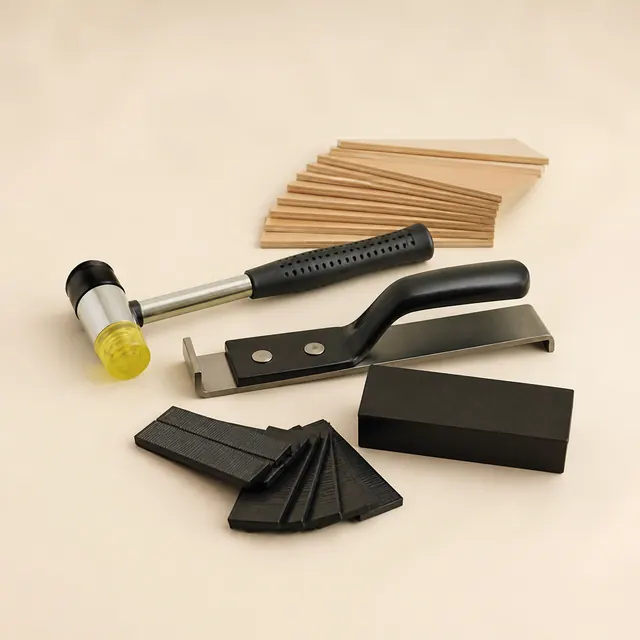
Your measurements and assumptions
Use the actual product label and your measured quantities. Starting values are editable examples, not universal rates or product specifications. Keep the units beside each input.
| Measured area | 20 | m² |
|---|---|---|
| Layers | 1 | |
| Extra allowance | 10 | % |
| Pack size | 8.3 | m² |
Method and assumptions
Whole bay-width strips are cut from each roll. A roll narrower than a bay cannot supply an unjoined strip and is rejected. Offcut reuse is not assumed.
Example with the selected inputs
- Required quantity: 22 m²
- Packs to buy: 3
- Purchase quantity: 24.9 m²
- Left over: 2.9 m²
Change the inputs to match your own task. Whole packages are rounded up after allowances, so purchase quantity and actual requirement can differ. Apply each allowance once.
Worked example
With Measured area: 20 m²; Layers: 1; Extra allowance: 10 %; Pack size: 8.3 m², the calculator returns Required quantity: 22 m².
| Inputs | Changed input |
|---|---|
| Measured area | 20 m² |
| Layers | 1 |
| Extra allowance | 10 % |
| Pack size | 8.3 m² |
| Calculated result | Changed input |
|---|---|
| Required quantity | 22 m² |
| Packs to buy | 3 |
| Purchase quantity | 24.9 m² |
| Left over | 2.9 m² |
Method and assumptions
Common-value reference
The reference cases change only Measured area. The remaining inputs stay at the displayed values. These are worked scenarios, not universal rates, dimensions, product specifications or current shop prices.
| Measured area | Required quantity |
|---|---|
| Measured area: 20 m² | Required quantity: 22 m² |
| Measured area: 10 m² | Required quantity: 11 m² |
| Measured area: 30 m² | Required quantity: 33 m² |
| Measured area: 40 m² | Required quantity: 44 m² |
| Measured area: 60 m² | Required quantity: 66 m² |
Questions and answers
How is this example calculated?
In the displayed example, Measured area: 20 m²; Layers: 1; Extra allowance: 10 %; Pack size: 8.3 m². The calculated outputs are Required quantity: 22 m²; Packs to buy: 3; Purchase quantity: 24.9 m²; Left over: 2.9 m². Keep the labels and units with these numbers: they describe this particular combination of inputs, not a result that can be reused after the measurements or assumptions change.
What changes when I edit Measured area?
The table isolates that input while keeping the other displayed settings fixed. For Measured area: 10 m², the result is Required quantity: 11 m²; for Measured area: 60 m², it is Required quantity: 66 m². Those values come from the same calculator used on this page. They show the effect of changing the input, rather than prescribing which input is right for your own task.
How should I use the different result figures?
Read each named quantity separately: Required quantity: 22 m²; Packs to buy: 3; Purchase quantity: 24.9 m²; Left over: 2.9 m². A value with a different label or unit answers a different part of the calculation. Check the measurements and assumptions before using any figure. The reference cases explain the arithmetic under their stated conditions; they do not verify a product label, a recipe or the conditions of a particular project.
Insulation rolls for 800 square feet
800 ft² is 74.32 m². The examples below use Knauf Loft Roll 44 Ready-cut products; they are quantity examples, not interchangeable thermal specifications. A thicker roll can cover less area even when the width is the same.
| Thickness | Width × length | Label coverage | Rolls for 800 ft² |
|---|---|---|---|
| 100 mm | 1.14 × 12.18 m | 13.89 m² | 6 |
| 150 mm | 1.14 × 8.05 m | 9.18 m² | 9 |
| 200 mm | 1.14 × 6.00 m | 6.84 m² | 11 |
Source: Knauf product variants and packaging. Whole rolls = round upward(area × layers × (1 + allowance/100) ÷ roll coverage), using matching area units. One ft² equals 0.09 m². If layers use different products, calculate each product separately. The existing bay mode above checks strip geometry; an area total alone does not prove that offcuts fit.
Get dimensions with room measurements and compare the separate roof-covering quantity guide when planning the roof project.
Roll quantity questions
Does 800 square feet always need twenty rolls?
Only if each roll covers 40 ft² and the calculation uses one layer with zero allowance. 800 ÷ 40 = 20. Enter the coverage of your actual roll; the sourced Knauf examples above use different areas.