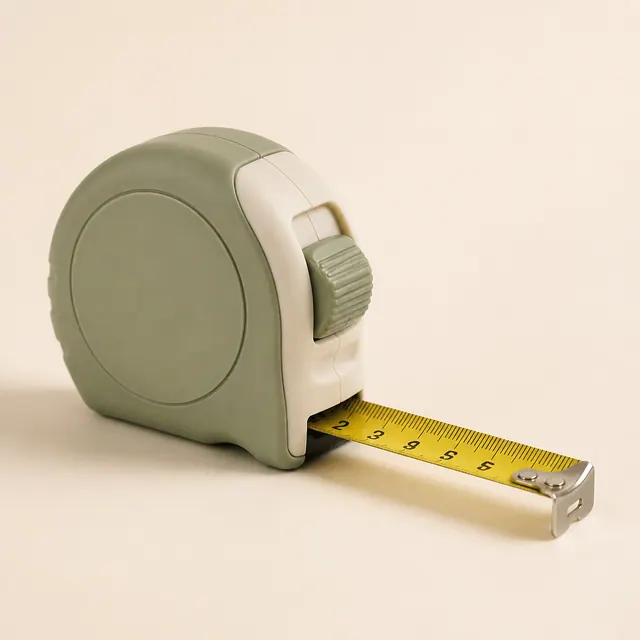
Measure the perimeter and height
Measure every wall to be papered and add the widths to get the perimeter. Measure the height from skirting to ceiling in several places and use the largest figure. For complex rooms, measure above and below large windows separately.
Check the roll size on the label
A common UK roll is about 10.05 m long and 52–53 cm wide, roughly 5.3 m². Wide-width, mural and imported products differ, so always use the length and width printed on the roll you intend to buy.
Work in strips, not square metres
Each strip must cover the wall height plus a trimming allowance, so the cut length is height plus trim. A roll only gives whole strips: divide the roll length by the cut length and round down. Short leftover pieces are useful above doors and windows, but do not count them as extra strips.
Worked example
An 18 m perimeter needs 34 strips of 0.53 m width; adding one spare strip gives 35. With 2.5 m walls and 10 cm trim, each strip is 2.6 m, so a 10 m roll gives 3 full strips with 2.2 m left over. 35 strips at 3 per roll is 12 rolls.
Allow for the pattern repeat
With a pattern repeat, each cut length is rounded up to a whole number of repeats so the pattern lines up. In the example, a 64 cm repeat raises each strip to 3.2 m. The roll still gives 3 strips, but only 0.4 m is left over instead of 2.2 m, so there is much less spare paper. Graham & Brown describes three match types: free match, straight match and offset match. Follow the repeat and match symbol on the label.
Practical checklist
- Check that every roll has the same batch number before opening any.
- Keep the labels until the room is finished.
- Hang from the least visible corner so the final join falls where it is least noticeable.