Measure the walls, not the floor
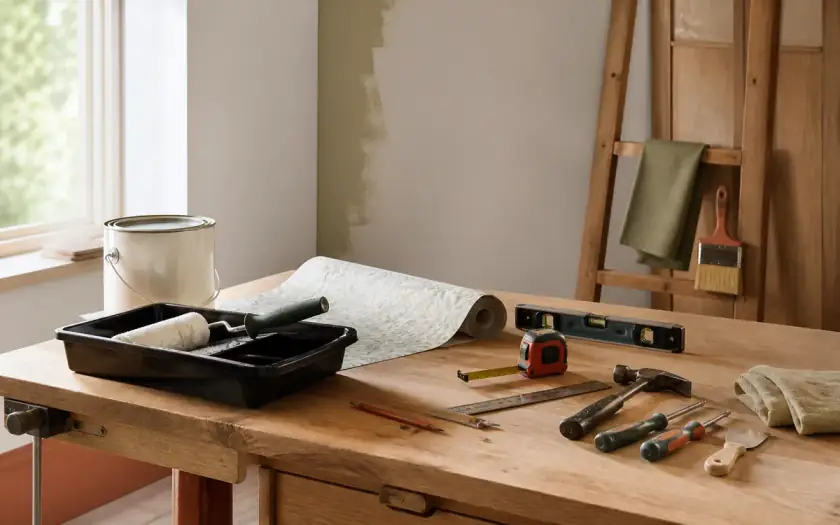
Multiply each wall’s length by its height in metres. A 5 × 4 m room with 2.5 m walls has two walls of 12.5 m² and two of 10 m², so 45 m² in total. Measure large doors and windows and subtract them; small openings can stay in the total as a modest buffer. Keep ceilings, woodwork and feature walls as separate calculations, because they normally use different products.
Read the coverage figure on the tin
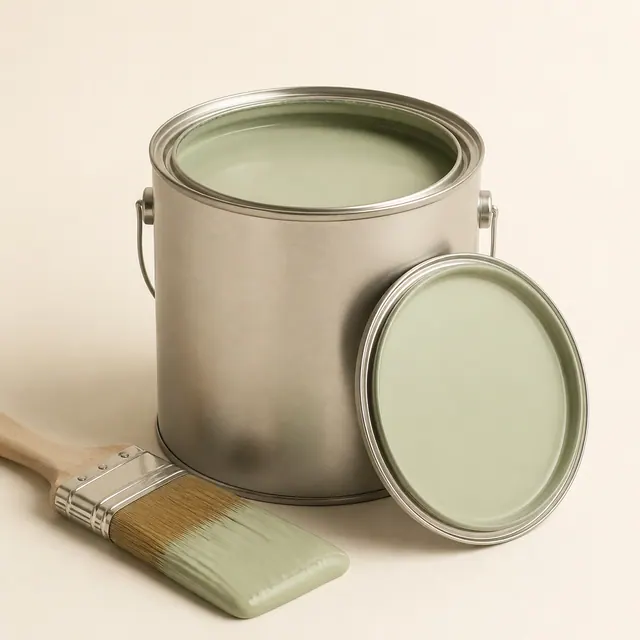
Coverage is stated for one coat: 10 m²/L means a litre covers about 10 m² once under the maker’s test conditions. Two coats need twice the paint. Fresh plaster, bare wood, masonry and textured walls absorb more, and a large colour change can need an extra coat. Use the specific product’s figure from the tin or its technical data sheet, and do not count primer or a mist coat as a finish coat.
Worked example
The 5 × 4 m room above has 45 m² of wall. Subtracting 4.7 m² of door and window leaves 40.3 m². Two coats at 10 m²/L need 8.06 L, and a 10% allowance brings this to 8.866 L. Sold in 2.5 L tins, that is 4 tins (10 L), leaving about 1.1 L for touch-ups. A third coat would raise the need to 12.09 L before the allowance, and to 6 tins.
Round up once, at the end
Apply the allowance to the total, then round only the final number of tins. Rounding every wall separately can add a whole tin you do not need. For a tinted colour, buy all tins together so they come from the same mixing batch, and keep the leftover labelled with the room and date.
Practical checklist
- Sketch the room and write each measurement beside its wall.
- Use the coverage figure for the exact product, not a generic number.
- Check the retailer’s policy on returning unopened tins before buying a spare.