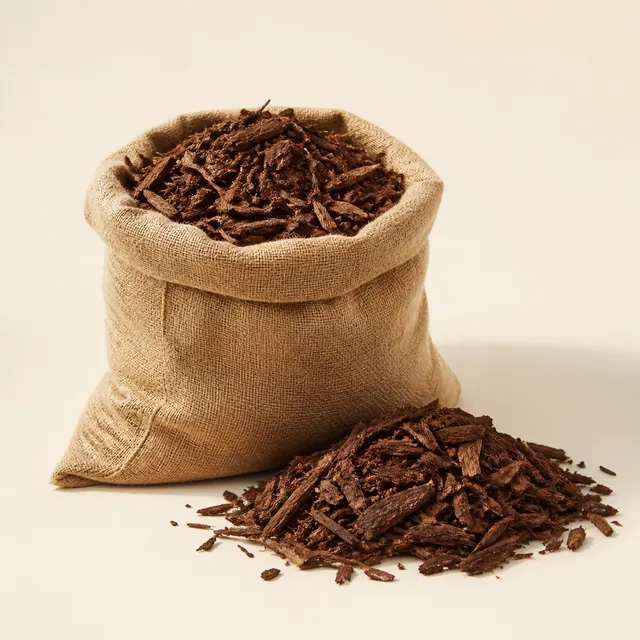
Depth to bags
Measure the area actually being covered.
- Volume = area × depth. Keep mulch clear of stems and use a depth suitable for the chosen material and plants.

Garden calculator
Calculate mulch or bark from area and depth, or use a supplier’s stated litres-per-area rate.
A 5 × 4 m bed mulched 7 cm deep needs 1.4 m³. With a 10% allowance that is 1,540 L, or 31 bags of 50 L.
Amazon
Every calculation option
Measure the area actually being covered.
Use this mode when the supplier quotes litres per square metre.
A 5 × 4 m bed mulched 7 cm deep needs 1.4 m³. With a 10% allowance that is 1,540 L, or 31 bags of 50 L.
| Input | Value |
|---|---|
| Measured sections | Length 5 m, Width 4 m |
| Mulch depth | 7 cm |
| Extra allowance | 10 % |
| Pack size | 50 L |
| Result | Value |
|---|---|
| Volume before allowance | 1.4 m³ |
| Required quantity | 1,540 L |
| Packs to buy | 31 |
| Purchase quantity | 1,550 L |
| Left over | 10 L |
Volume is area multiplied by depth. Doubling the depth doubles the volume before pack rounding. Convert centimetres to metres when working by hand: 20 m² at 5 cm needs 1 m³, or 1,000 L. Choose a depth suitable for the material and planting.
Use the stated bag volume if available. Wood chips, bark and other mulches can have very different density and moisture content. The tool's pack rounding uses volume, so a kilogram label alone cannot establish how many litres the bag will cover.
Split the area into shapes you can measure, calculate their areas and add them before applying the chosen depth. Leave out paths and other spaces you will not cover. Convert centimetres of depth to metres for a cubic-metre result, then compare that volume with the supplier's actual bag or bulk quantity.
Calculation/content reviewed 4 October 2026. Source: Babushka Market’s displayed formulas, units and labelled editable assumptions. How the estimates work