
Babushka Market

Cooking & Baking guide

How to Choose a Coffee Grinder

Compare burr type, adjustment range, capacity and workflow for the way you brew.

Cooking and baking planning tools

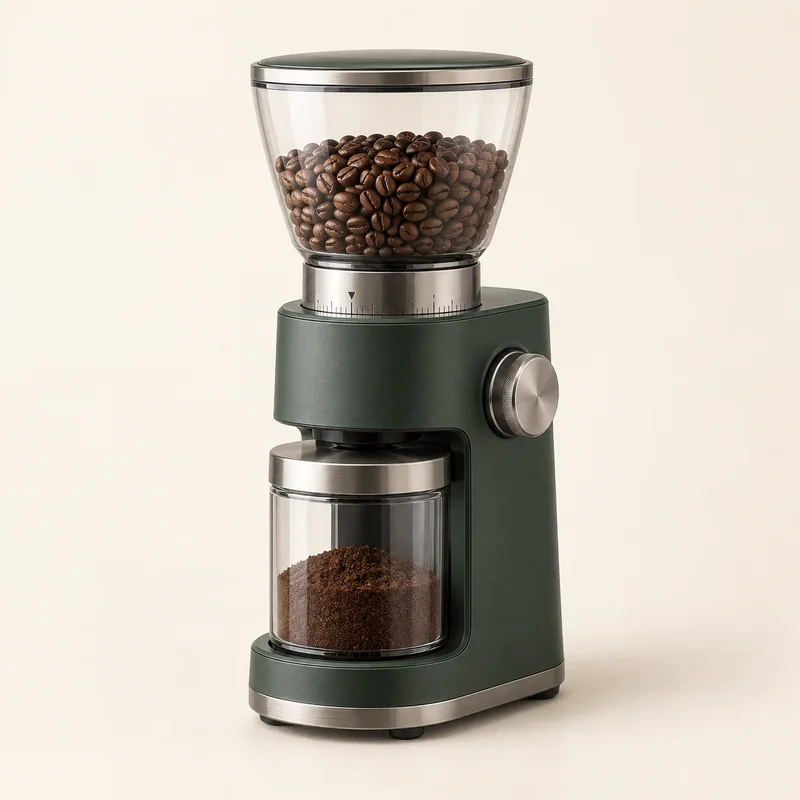
Burrs improve repeatability

A burr grinder controls the gap between grinding surfaces and generally produces a more consistent particle range than a blade grinder.

Match adjustment to the brewer

Espresso needs fine, precise adjustment, while filter and immersion methods need reliable medium-to-coarse settings. More settings are useful only when they cover the required range.

Size for a normal batch

Choose hopper and catch-cup capacity around the batch you actually brew. Oversized storage in a clear hopper can expose beans to light and air.

Practical checklist

  • Consider noise, retention and cleaning access.
  • Do not assume an espresso-capable grinder is needed for filter coffee.
Your measurements and assumptions

Use the actual product label and your measured quantities. Starting values are editable examples, not universal rates or product specifications. Keep the units beside each input.

No universal grind number. Capacity/dimensions come from manufacturer specs or entered values.

Change the inputs to match your own task. Whole packages are rounded up after allowances, so purchase quantity and actual requirement can differ. Apply each allowance once.

Example from an existing calculator

Coffee Ratio & Supply Calculator | Babushka Market. This worked example demonstrates the calculation in the linked tool. Its displayed assumptions apply to that example; use the guidance above to decide which measurements, product specifications or quantities belong to your own task.

Worked example

With Water mass: 500 g; Water per gram of coffee: 16 g/g, the calculator returns Coffee required: 31.25 g.

Inputs
InputsChanged input
Water mass500 g
Water per gram of coffee16 g/g
Calculated result
Calculated resultChanged input
Coffee required31.25 g

Method and assumptions

Coffee = water mass ÷ ratio. This plans brew inputs, not finished drink yield; water retained by grounds is not estimated. Espresso uses a different convention, so do not substitute beverage yield for water here.

Common-value reference

The reference cases change only Water mass. The remaining inputs stay at the displayed values. These are worked scenarios, not universal rates, dimensions, product specifications or current shop prices.

Common-value reference
Water massCoffee required
Water mass: 500 gCoffee required: 31.25 g
Water mass: 250 gCoffee required: 15.625 g
Water mass: 750 gCoffee required: 46.875 g
Water mass: 1000 gCoffee required: 62.5 g
Water mass: 1500 gCoffee required: 93.75 g

Questions and answers

How is this example calculated?

Coffee = water mass ÷ ratio. This plans brew inputs, not finished drink yield; water retained by grounds is not estimated. Espresso uses a different convention, so do not substitute beverage yield for water here. In the displayed example, Water mass: 500 g; Water per gram of coffee: 16 g/g. The calculated outputs are Coffee required: 31.25 g. Keep the labels and units with these numbers: they describe this particular combination of inputs, not a result that can be reused after the measurements or assumptions change.

What changes when I edit Water mass?

The table isolates that input while keeping the other displayed settings fixed. For Water mass: 250 g, the result is Coffee required: 15.625 g; for Water mass: 1500 g, it is Coffee required: 93.75 g. Those values come from the same calculator used on this page. They show the effect of changing the input, rather than prescribing which input is right for your own task.

How should I use the different result figures?

Read each named quantity separately: Coffee required: 31.25 g. A value with a different label or unit answers a different part of the calculation. Check the measurements and assumptions before using any figure. The reference cases explain the arithmetic under their stated conditions; they do not verify a product label, a recipe or the conditions of a particular project.